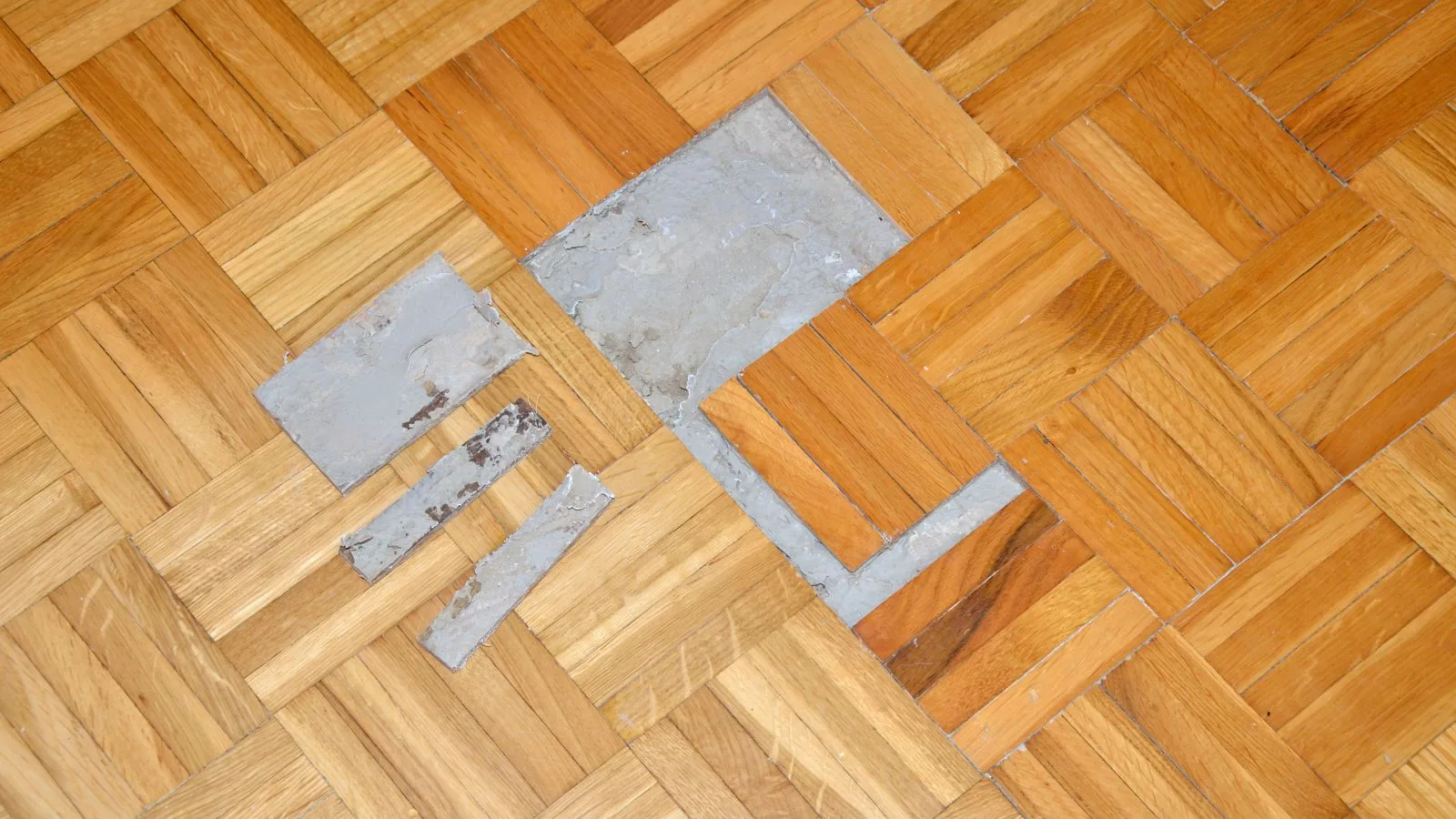
Wood is a natural sponge. When a hardwood, laminate or engineered floor gets wet, boards absorb water along their edges and undersides, swell and push against each other. The visible results are cupping, where board edges rise, crowning, where the centers rise, and buckling, where boards lift off the subfloor.
Hardwood floor water damage repair in Chester, PA starts with drying the floor and the subfloor under it. Whether the floor can be saved depends on how long it was wet, what the water carried and how the floor was installed.
Cupping, crowning and buckling
Cupping happens when the underside of a board is wetter than the top, often from a leak below the floor or from moisture in the subfloor. Crowning is the opposite and often shows after a cupped floor is sanded too early. Buckling is the worst case, when boards pull loose from the subfloor.
Laminate floors swell at the seams and the core turns to mush. Engineered wood has a plywood core that handles some moisture but not a long soak.
ANSI/IICRC S500 is the standard that guides drying wet wood floors, and it is the reference for deciding when a floor can be dried in place. Ask the crew to show readings from the subfloor as well as the boards.
What to do right away
- Stop the sourceClose the valve, then remove standing water with towels or a wet vacuum.
- Lift furnitureMove furniture off wet flooring. Place foil or plastic blocks under legs if you must leave it.
- Do not use heatHeat guns and space heaters cause cracks and uneven shrinking.
- Take photographsShow the edges, any staining and the source.
Do not sand or refinish a floor until it is dry. Sanding a wet floor locks in problems.
How a wood floor is dried
Specialized drying mats and low-profile air movers pull moisture from the floor surface. Small holes may be drilled in the subfloor from below or at the edges to release trapped water. Moisture meters check the boards and the subfloor, and readings are compared with a dry reference, as described on the structural drying page.
Drying a floor too fast can cause splits, so the crew adjusts equipment and monitors daily.
Wet wood floors? Call for a drying plan.
☎ (856) 702-0892Save it, sand it or replace it
Floors that cupped slightly and dried within days can often be sanded and refinished after settling. Floors that were wet for a long time, contaminated or glued down over concrete may need partial or full replacement. A flooring contractor makes that call after moisture readings are in range.
Water on a floor usually comes from somewhere. A leak under the floor may come from a source covered on appliance leak water damage or kitchen water damage. Flooring in a basement or over a crawl space is covered on basement water damage and crawl space water damage. For carpet, see carpet water damage restoration.
How different floors react
| Floor type | What water does | Usual outcome |
|---|---|---|
| Solid hardwood | Boards cup or crown as they absorb and release moisture | Often saved when dried quickly, then sanded and refinished |
| Engineered wood | The plywood core swells and the veneer can delaminate | Mixed, short exposures can recover and long ones rarely do |
| Laminate | The fiberboard core swells at the seams | Usually replaced once the seams lift |
| Parquet | Adhesive loosens and small blocks lift | Spot repair or replacement of the affected area |
The floor in the photograph at the top of this page is parquet with lifted patches, which is a common result when glue-down flooring meets water. Whatever the floor type, moisture readings decide the plan, and a flooring contractor handles the refinishing or replacement after drying.
Cost factors and insurance
- Floor type. Solid, engineered, laminate and parquet behave differently.
- Time wet. Hours versus days changes the outcome.
- Area. More rooms add drying and repair.
- Finish. Refinishing and staining match are separate flooring costs.
Sudden water damage to flooring is often covered by homeowners insurance, and long-term seepage often is not. Check your policy or ask your insurer, and photograph the floor before work begins. Call (856) 702-0892 to talk through a drying plan.
Common questions
Can a buckled floor be saved?
Sometimes, if boards have not broken and the subfloor dries. Severe buckling usually means replacement.
How long before I can refinish?
Only after moisture readings return to dry levels and the floor has settled. That is measured, not guessed.
Do you handle hardwood floor water emergencies at night or on weekends in Chester?
Dispatch answers 24 hours a day. Close the source and call, since early drying matters for wood.
Why did my floor cup weeks after the leak?
Moisture was trapped in the subfloor or under the boards. Check readings, not appearance.
Is parquet different?
Parquet is glued in small blocks and may loosen when the adhesive gets wet.
Still have a question? A dispatcher can answer it by phone any hour.
☎ (856) 702-0892