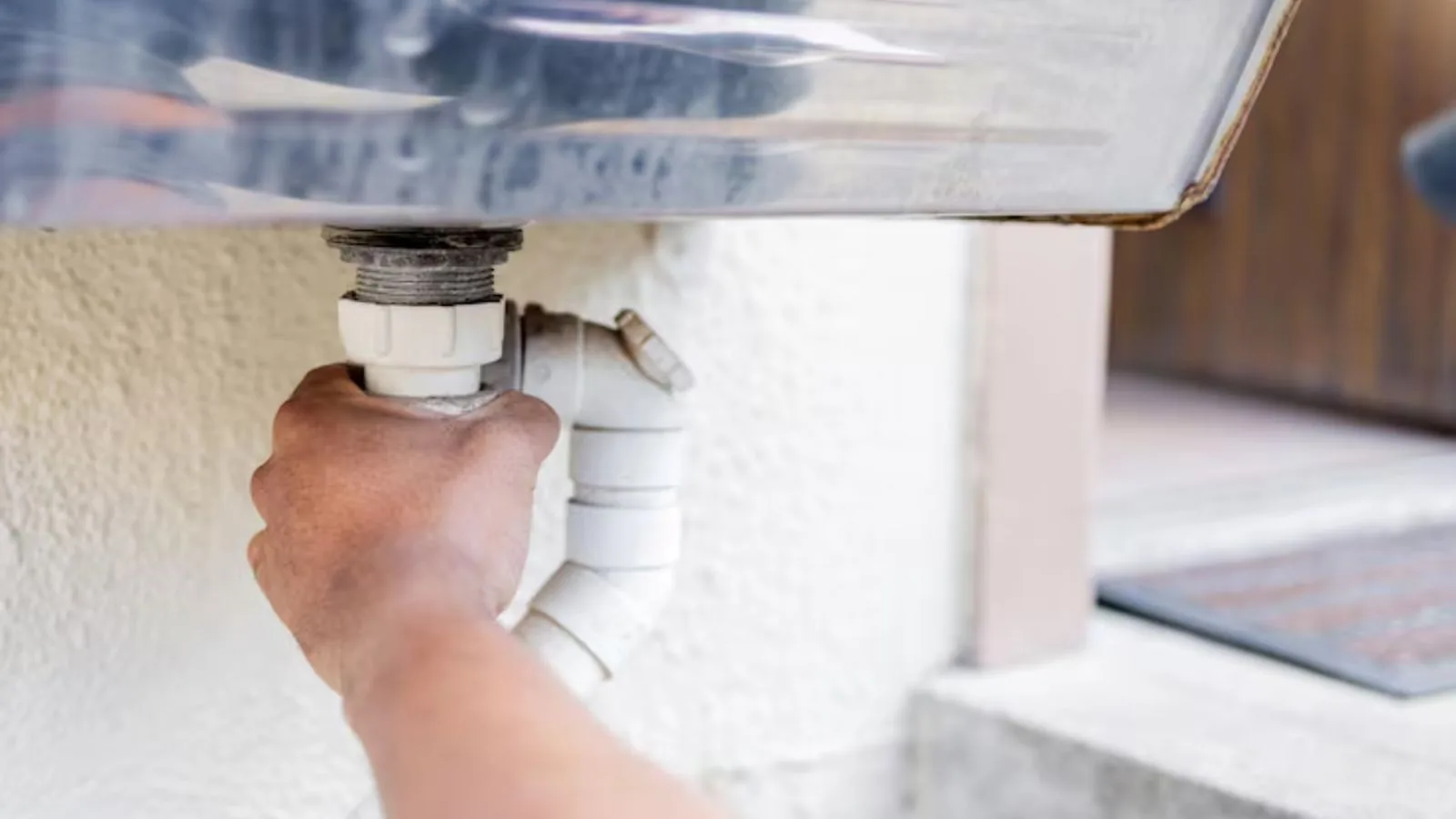
A water heater holds a lot of water, commonly forty to eighty gallons for a household tank, and when the tank fails that volume goes to your floor. Slow drips from a fitting are different, they can run for weeks and rot a subfloor quietly. If the floor around your heater is wet right now, this is an emergency and our 24/7 dispatch line is open.
Water heater leak cleanup in Chester, PA starts with shutting down the supply, removing the water and drying everything the water touched. The plumber replaces the heater. We handle the water damage around it.
Shut down a leaking water heater safely
- Cut the fuel or powerFor an electric unit, turn off its breaker if the panel is dry and reachable. For a gas unit, turn the gas control to off. If you smell gas, leave and call the gas utility.
- Close the cold inletThe cold water valve on top of the tank stops more water from refilling it.
- Do not touch hot waterWater from a tank can be hot enough to scald. Keep children away from the puddle.
- Photograph the damageTake pictures of the unit, the label and the wet floor before cleanup.
Do not step into water near a panel, outlets or an electric heater. If you cannot cut power safely, call the electric utility or 911 before calling us.
Drying around a failed tank follows ANSI/IICRC S500, the published standard for water damage restoration. Ask any company whether its crews work to it.
Where the water goes
Water heaters sit in basements, closets, garages and utility rooms, and water spreads outward until it meets a drain, a wall or a lower level. A tank in a first-floor closet can send water through the floor to the ceiling below. A basement unit can wet the bottoms of walls, stored boxes and finished flooring.
In many homes the heater sits on a concrete basement floor. That makes extraction easy but the bottom plate of nearby framing and any drywall that touched water still need drying. Check for damp drywall along the wall behind the unit and for wet carpet nearby.
Water heater leaking onto the floor? Call dispatch now.
☎ (856) 702-0892Cleanup and drying
The crew extracts the water with wet vacuums or pumps, then uses moisture meters to see how far it traveled. Wet baseboards and the lowest strip of drywall are often removed to dry the cavity. Air movers and LGR dehumidifiers finish the job, the same process described on the structural drying page.
If water reached a finished floor, the hardwood floor and carpet pages explain what can be saved. For a leak that ran undetected for days, treat it like a hidden leak and ask about mold, covered under mold remediation.
Slow leaks and old tanks
A tank that drips from the bottom has usually corroded through and will not be repaired. A slow leak from a valve or a fitting can often be fixed by a plumber. Either way, the damage under and around the heater is what we address.
Many homeowners find slow leaks when they move a heater for replacement. Rust stains on the floor, a soft subfloor or a musty smell near the unit are signs the leak ran for a while.
Cost factors and insurance
- Volume and duration. A full tank released at once is one job. A slow leak that ran for weeks is another.
- Floor type. Concrete is simple, finished flooring is not.
- Rooms affected. Water that moved into adjacent rooms or a floor below widens the scope.
- Heater replacement. That is a plumber cost and is separate from water damage work.
A sudden tank failure is often covered by homeowners insurance, while gradual leaks from long-term corrosion are often treated differently. Check your policy or ask your insurer, and keep receipts. For a real scope, call (856) 702-0892. Scope and price are explained before work starts.
Common questions
Do you handle water heater leak emergencies at night or on weekends in Chester?
Yes. Dispatch answers 24 hours a day. Tell the dispatcher whether the heater is gas or electric and whether the supply is off. Same-day response is offered when a crew is available.
Do you replace water heaters?
No. A plumber replaces the heater. We remove water, dry the structure and handle the restoration around it.
Is a water heater leak covered by insurance?
Sudden failures are often covered, and slow leaks from wear can be handled differently. Read your policy or ask your insurer.
How do I know if the leak is the heater or a pipe?
Check whether water pools under the tank or runs down from a pipe above it. A dry tank with a wet pipe fitting above points to the plumbing, not the tank.
Is the water from a heater clean?
It starts as clean supply water but can pick up sediment from the tank bottom and turn gray after sitting on materials. Dry it promptly.
Still have a question? A dispatcher can answer it by phone any hour.
☎ (856) 702-0892