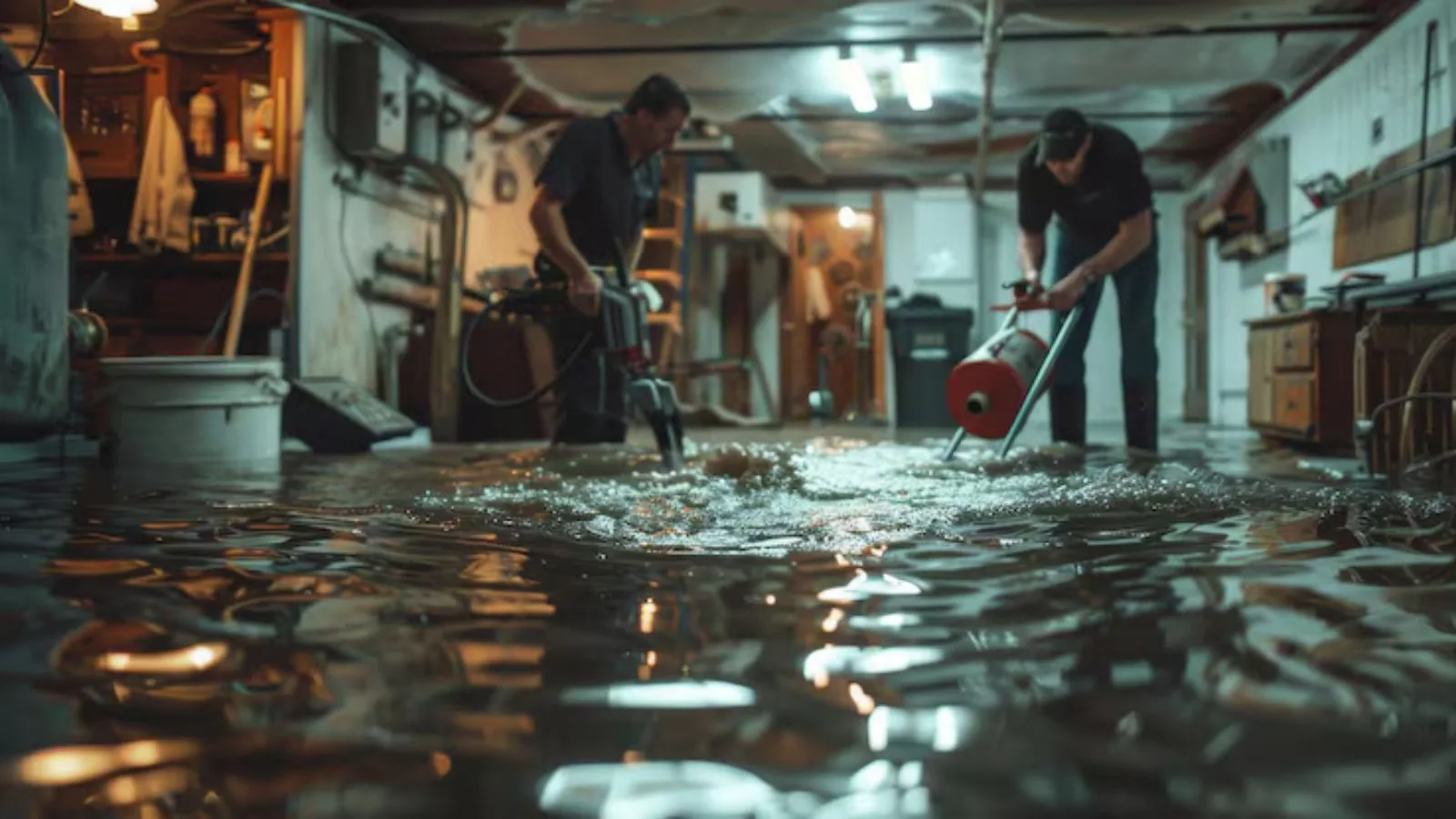
Water extraction is the first job on almost every wet loss. It means getting standing water out of the building before it soaks into subfloor, drywall and framing. If water is pooled on a floor in Chester right now, treat it as an emergency. Our 24/7 dispatch line is open, and the steps below cover what you can safely do while you wait.
Water extraction in Chester, PA uses submersible pumps, wet vacuums and portable or truck-mounted extraction units. Once the free water is gone, the crew checks what the surface water left behind, because wet materials keep releasing moisture long after the puddles disappear.
When standing water is an emergency
Depth fools people. One inch of water across a 1,000 square foot floor is roughly 620 gallons, and it does not stay on the floor. Water wicks up drywall, soaks carpet pad, and slips under baseboards into wall cavities within hours. The longer it sits, the more material has to be torn out instead of dried.
Call right away if water is still rising, if it covers more than one room, if it came from a pipe you cannot shut off, or if it is near outlets, a panel or appliances. A few damp towels are a different job. Anything you cannot mop up in one pass belongs on the extraction side.
What to do before the crew arrives
The most useful thing you can do is stop more water from coming in. Shut the valve at the fixture, or the main valve if the source is unclear. Then work through the list below in order.
- Stop the sourceClose the fixture valve or the main shutoff. If the water is coming from outside, do not wade into it.
- Mind the electricityLeave the power on if you cannot reach the panel without standing in water. If the panel is dry and reachable, switch off the circuits for wet rooms. Call 911 or the utility for any sparking or buzzing.
- Lift what you canMove small furniture, rugs and boxes onto dry surfaces. Do not strain to move heavy pieces through water.
- Photograph firstPennsylvania Insurance Department guidance is to take pictures or video of the damage before cleanup. Do it before you start moving things.
Keep children and pets out of the room. Do not run a household vacuum on a wet floor, and do not try to dry walls with a space heater.
Water still on the floor? Talk to a dispatcher now.
☎ (856) 702-0892How extraction is done
Equipment depends on depth and surface. Submersible pumps handle several inches of water in a basement or garage. Wet vacuums clear shallow water from hard floors. On carpet, weighted extraction wands and truck-mounted or portable extractors pull water out of the pad as well as the pile, which hand vacuums cannot do.
After the bulk water is out, the crew walks the space with moisture meters and a thermal imaging camera. Meters give a number for each material. The camera shows cool, wet areas behind paint and under flooring. That map decides where drying equipment goes and which materials cannot be saved.
Extraction ends and drying begins. Water pulled from the surface leaves wet drywall, framing and subfloor behind. That moisture is handled by air movers and LGR dehumidifiers, which is covered on the structural drying and dehumidification page.
What the water came from matters
Clean supply water from a failed line is the simplest case, and the burst pipe page covers that source. Water that entered from outside, such as a swollen creek or river, carries soil and bacteria and is handled differently, which is explained under flood damage cleanup. If the water smells of sewage or came up through a drain, stay out and read the sewage backup page first.
Chester sits on the west bank of the Delaware River, and Chester Creek meets the river inside the city. If your block is near either, check your address on the FEMA Flood Map Service Center and ask your insurer whether flood damage is covered, because standard homeowners policies often exclude it.
What drives the cost of extraction
No honest price can be given without seeing the water. These are the factors that move the number most.
| Factor | Why it changes the job |
|---|---|
| Water category | Clean, gray and contaminated water need different protection, disposal and follow-up. |
| Depth and area | More square footage and more depth means more pump time and more wet material. |
| Floor type | Carpet and pad take longer to extract than tile or sealed concrete. |
| Time standing | Water that has sat for a day has reached drywall and subfloor, which adds drying days. |
| Access | Basements, tight crawl spaces and long hose runs add setup time. |
Sudden and accidental water damage is often covered by homeowners insurance, while gradual leaks and flooding often are not. Check your policy or ask your insurer before you decide. For a real number on your situation, call (856) 702-0892 and describe what you see. Scope and price are explained before work starts.
Water extraction questions from Chester homeowners
Do you handle water extraction emergencies at night or on weekends in Chester?
Yes. The dispatch line is open 24 hours a day, every day. Night and weekend calls get the same questions as daytime calls: where the water is coming from, how deep it is, and whether anyone is at risk from electricity. Same-day response is offered when a crew is available, and the dispatcher will tell you honestly what to expect.
Can I rent a pump and do it myself?
Small amounts, yes. For anything deeper than a few inches or wider than one room, a rented pump removes the standing water but does not find the moisture left in walls and flooring. That hidden moisture is what turns into mold and warped floors, so the follow-up check is the part worth paying for.
How soon does water need to be extracted?
As soon as it is safe. Drywall and carpet pad begin absorbing within the first hours. The industry standard for water damage restoration, ANSI/IICRC S500, treats fast water removal as the step that sets how much can be saved, so ask any company whether its crews work to it.
Will extraction save my carpet?
Often, when the water is clean and the carpet is extracted quickly. Carpet that sat in contaminated water, or has been wet for days, is usually removed. The crew checks the pad first, since pad is cheap to replace and holds the most water.
Do you extract water from basements and garages?
Yes. Basements and garages are common calls because they sit below grade and collect water from storms and failed sump pumps. Tell the dispatcher about outlets, stored items and any fuel or chemicals on the floor.
Still have a question? A dispatcher can answer it by phone any hour.
☎ (856) 702-0892