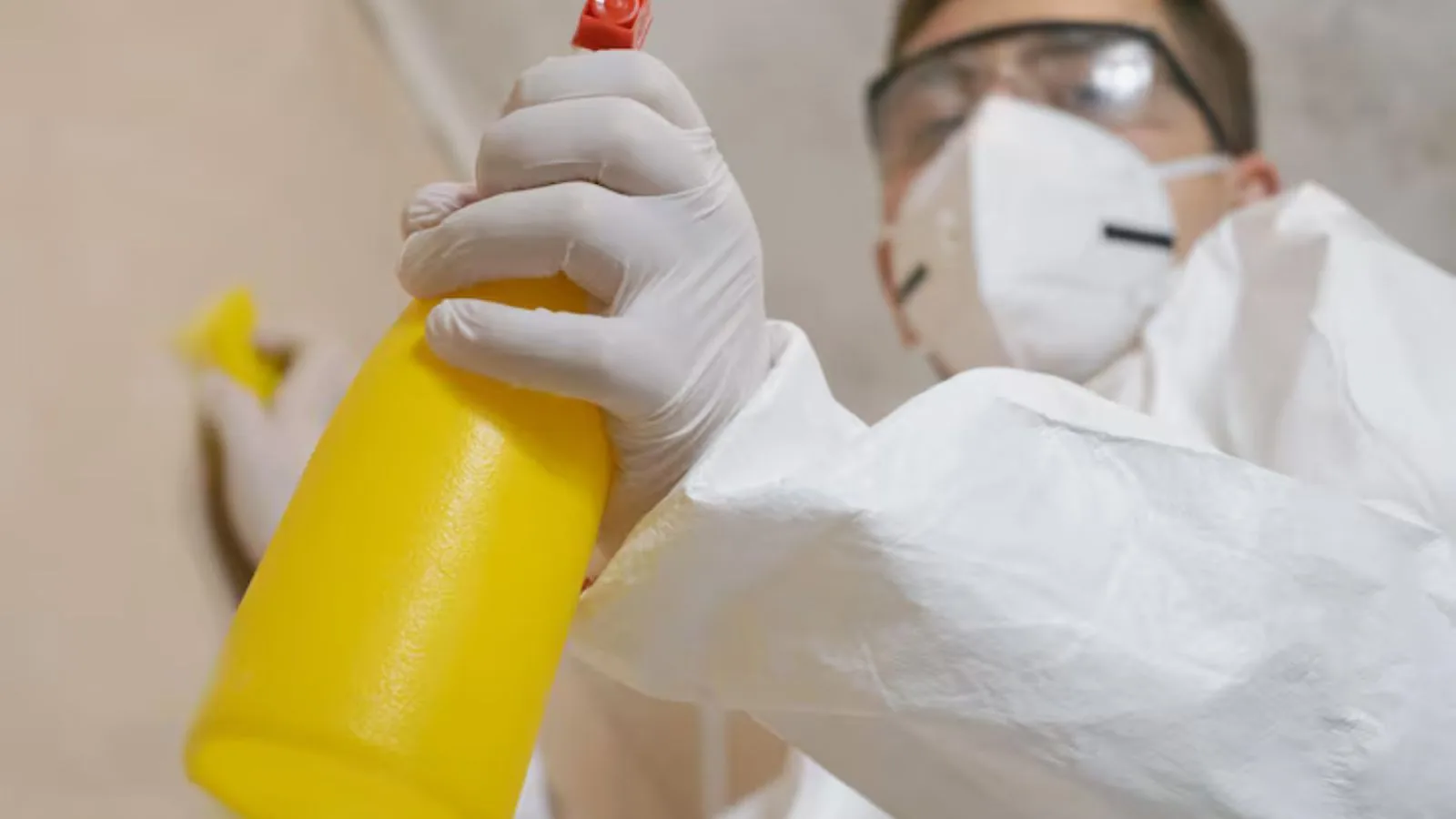
Mold needs moisture, organic material and time. A wall that stayed wet after a leak, a damp crawl space or a basement that took on storm water can give it all three. Mold remediation in Chester, PA means containing the area, removing contaminated material, drying the building, and cleaning up. It is not the same as spraying a surface cleaner.
Testing and remediation follow ANSI/IICRC S520, the published standard for mold remediation. Ask any company whether its crews work to it. Questions about health and mold belong with a physician.
Musty smell, spots on the wall: what is going on?
People rarely search for the technical term. They search for what they see and smell: a musty smell in the basement, black spots on a ceiling, fuzzy growth behind furniture, or paint that bubbles and darkens. Those are signs of moisture, and mold may be the result.
The first step is to find the water. Mold will return if the cause is not fixed. A moisture meter and thermal camera help locate wet materials, and a professional can tell you whether sampling is useful.
What remediation involves
| Step | What happens |
|---|---|
| Find and fix moisture | Locate the water source and have it repaired. |
| Containment | Plastic barriers and negative air machines keep spores from spreading. |
| Removal | Porous materials with growth, such as drywall and insulation, are removed and bagged. |
| Cleaning | HEPA vacuuming and damp wiping of hard surfaces. |
| Drying | Air movers and dehumidifiers bring materials to dry levels. |
| Verification | Readings and, when appropriate, post-remediation checks. |
Bleach is not a remediation method for porous materials. Surface cleaning does not remove growth inside drywall.
Common places mold shows up after water damage
Mold follows water. It appears behind baseboards after a leak, in carpet pad, in attic insulation under a roof leak and on joists in a damp crawl space. Basements with high humidity are another common spot.
For sources, see basement water damage, crawl space water damage and wall and drywall water damage. Drying that prevents it is described on the structural drying page.
Mold or a musty smell? Call for a plan.
☎ (856) 702-0892What not to do
Do not disturb a large area of mold with a broom or dry brush. Do not run a fan across it. Do not paint over it. Do not seal it with caulk. If the area is larger than a small patch, call for a professional.
For licensing, ask whether your state licenses mold work and ask the company to explain its credentials, since rules differ from state to state.
Written scope, clearance and comparing quotes
A good mold scope is written down. It should say which rooms are involved, how containment will be set up, what materials will be removed, how the moisture problem is being addressed and what happens at the end. Ask each company to put the same items in writing so quotes can be compared fairly.
Post-remediation verification checks that the work achieved its goal. For larger jobs, some property owners hire an independent assessor who is separate from the remediation company. That choice is yours. Home sales and lender requirements sometimes call for it, so ask your agent or lender what is expected.
Photographs before, during and after work, plus moisture readings, make a record you can hand to an insurer or a future buyer. Keep them with your house documents.
Cost factors and insurance
- Area and materials. More affected area and porous materials cost more.
- Containment. Larger jobs need more setup.
- Moisture cause. The water repair is separate.
- Testing. Some jobs include sampling and clearance checks.
Mold coverage varies a lot. Some policies cover mold after a covered water loss, and others limit or exclude it. Check your policy or ask your insurer. Call (856) 702-0892 to talk through your situation. Scope and price are explained before work starts.
Common questions
Can mold be removed for good?
Remediation removes growth, and drying removes the moisture it needs. If water returns, mold can too.
Do I need mold testing?
Sometimes. A professional can tell you whether sampling will change the plan.
Is mold covered by insurance?
Depends on the policy and the cause. Check your policy or ask your insurer.
Can I clean mold myself?
A small patch on a hard surface, maybe. Anything larger or inside walls should be handled by professionals.
Is mold dangerous?
Health questions belong with a physician. If someone has symptoms, ask a doctor.
Still have a question? A dispatcher can answer it by phone any hour.
☎ (856) 702-0892