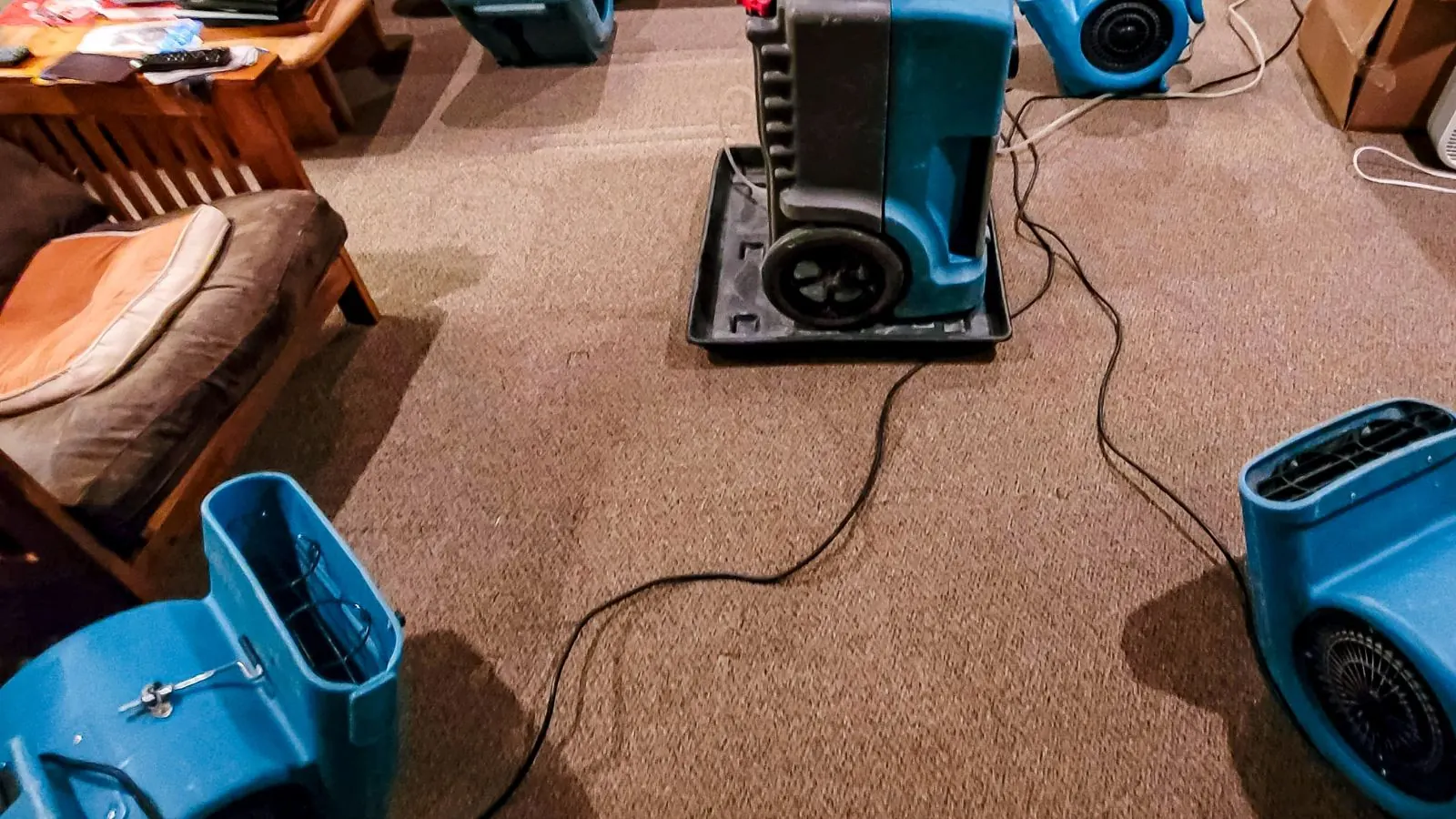
People want a number of days, and a number is hard to give without seeing the building. Drying time depends on the materials, how much water got in, how long it sat and the air in the house. What can be said is that professional drying is measured in days, and it ends when readings say so.
This guide explains each factor and shows how crews track progress, so you can tell whether a job is moving along or stalling.
The factors that set the timeline
| Factor | Effect on drying time |
|---|---|
| Material | Dense hardwood, plaster and concrete release water slowly. Carpet and drywall release it faster. |
| Amount of water | More water and more area means more moisture to remove. |
| Time before action | Water that sat for a day has soaked deeper than water removed within hours. |
| Air temperature and humidity | Warm, dry-air-moving conditions dry faster than cool, damp ones. |
| Airflow and equipment | Air movers and dehumidifiers set the rate. |
| Access to cavities | Wet cavities behind finished walls dry slowly unless opened. |
In short, here is what to do while you wait: keep the equipment running, keep a record of readings and report new stains. ANSI/IICRC S500 is the standard that frames professional drying.
Why surfaces feel dry before they are
The surface of drywall or a wood floor dries first, while moisture deeper in the material stays. That is why touch is a poor test. A meter reads the actual moisture, and a thermal camera shows cool, damp areas.
Stopping early is the most common cause of trouble later, such as a floor that cups weeks afterward or a wall that develops a smell. EPA guidance says to dry water-damaged areas and items within 24 to 48 hours to prevent mold growth, and professional drying is built around that window.
How drying is tracked day to day
A crew sets air movers and dehumidifiers, takes readings and returns to check them. Readings are logged for each affected material along with air conditions. Equipment is moved, added or removed as areas reach target.
- Day one: extract water, set equipment and take baseline readings.
- Following days: check readings, adjust equipment and open cavities if needed.
- Final check: confirm readings match the dry standard, then remove equipment.
The equipment and method are explained on our structural drying and dehumidification page.
What slows a job down
Closed-up cavities, heavy furniture left on wet carpet, turned-off equipment and high humidity outdoors all slow drying. So does a source that was never fully stopped. If readings stop dropping, the right move is to look for a new water source or a trapped area, not to wait.
Ask for the readings. If a company cannot show daily numbers, you cannot tell progress from guesswork.
Questions about drying? Call the 24/7 line.
☎ (856) 702-0892What you can do to help
- Keep doors and windows as the crew instructs, since open windows can raise indoor humidity in damp weather.
- Do not turn off equipment, and do not move it without asking.
- Keep a record of readings and photos for your insurer.
- Report any new stain, smell or sound right away.
Starting with fast removal of the bulk water makes everything after it shorter, which is covered on the water extraction page.
A comparison of three common losses
A single-room clean water leak on a hard floor may dry in a matter of days, once water is extracted and air is moving. A wet carpeted room, where pad has to be removed and the subfloor dried, takes longer. A wet wall cavity or a basement with wet block and sill plates takes longer still, because the materials are dense and the cavities are enclosed.
None of these is a promise. They show the relationship between material and time, and why your own readings, not a calendar, decide the finish line.
The role of dehumidifier type
Low grain refrigerant dehumidifiers pull more moisture from the air at lower humidity than household units. Desiccant units work in cold spaces. The right choice depends on the room and the temperature.
Ask what equipment is going in and why. A plain answer, such as one dehumidifier for the main floor and air movers on the wet walls, shows the plan has been thought through.
Signs a job has finished
- Readings on each wet material match the dry standard taken earlier.
- No cool spots show on a thermal camera scan.
- Humidity in the room is back to the level of unaffected rooms.
- Odors are gone.
- The crew has documented the final readings in writing.
If you are told the job is done and none of these has been shown, ask to see the numbers before equipment leaves. It is easier to ask on the final visit than to explain a cupped floor later.
Chester, PA: older basements and crawl spaces
In humid weather, dehumidification is the main tool. In Wallingford and Ridley Park, older basements and crawl spaces often hold moisture even after the visible water is gone, so readings in those areas matter.
Avoid opening windows to dry a house on a humid day. Let the crew tell you what suits the weather that week.
Drying questions from Chester homeowners
Can I speed up drying with fans from the hardware store?
Fans move air but do not remove moisture from it. Without dehumidification, the water can end up in other materials.
Why is equipment still running after a week?
Dense materials such as hardwood and plaster release water slowly. Check the readings against the dry standard.
Is a loud dehumidifier normal?
Yes. Commercial dehumidifiers and air movers are louder than household units.
Can I live in the house during drying?
Often in part. Ask the crew about noise, power and which rooms to avoid.
Still have a question? A dispatcher can answer it by phone any hour.
☎ (856) 702-0892