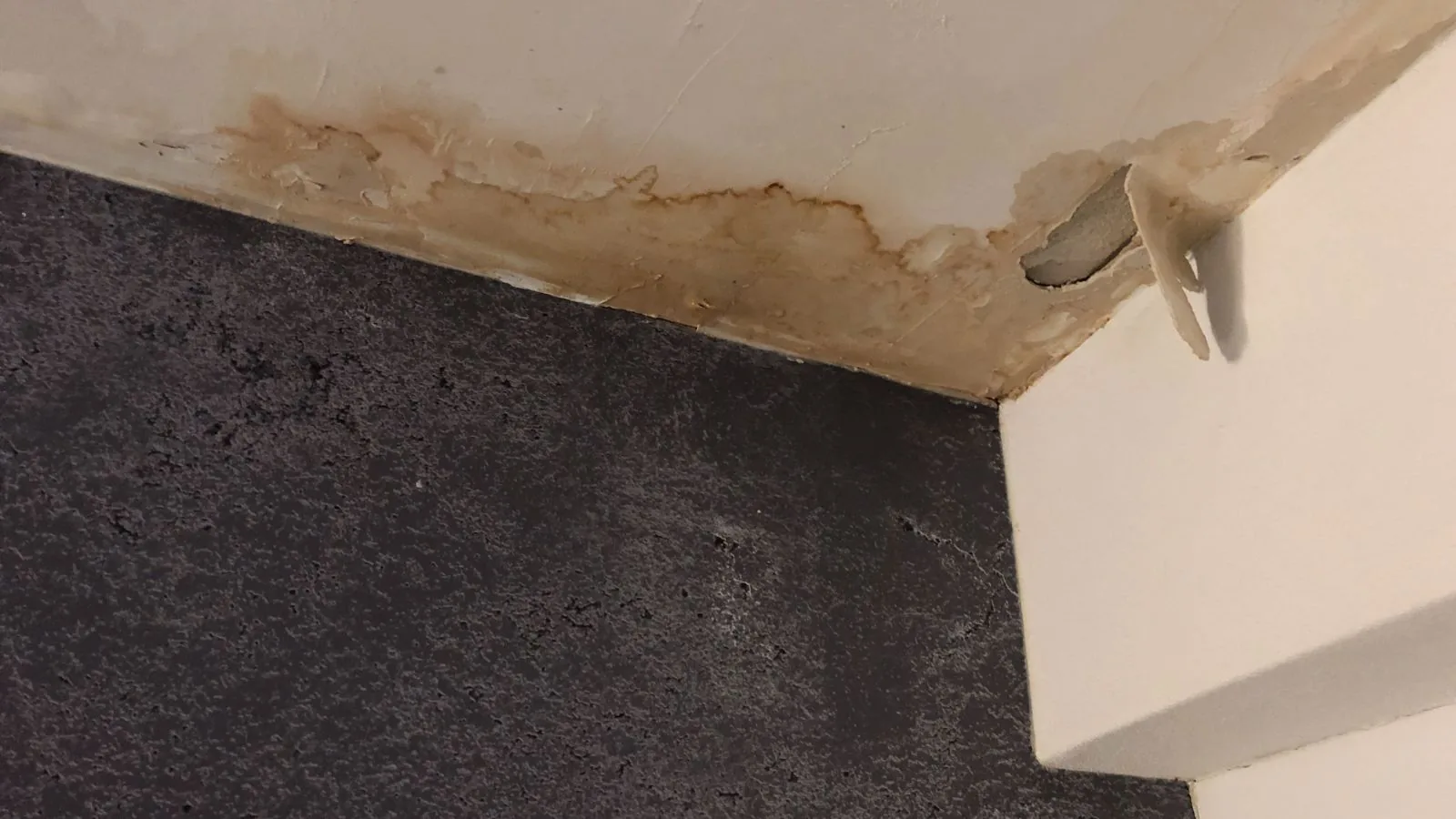
Hidden leaks cause damage in places you do not see, like wall cavities, under slabs and above ceilings. They also cause bills to climb. Finding one starts with simple tests that cost nothing and ends, if needed, with instruments.
This guide gives a step-by-step method, explains what each result means and says when to call for help.
Start with the water meter
- Turn off every fixture and appliance that uses water.
- Find the water meter and open the cover.
- Look at the leak indicator, which is often a small dial or triangle.
- If it moves with everything off, water is going somewhere.
- Close the main shutoff and check again. If it stops, the leak is inside your house. If it keeps moving, the leak is on the street side of the shutoff.
Take a photo of the meter reading, wait an hour with no water in use and take another. A changed number confirms a leak.
Once a leak is found, professional drying of the wet area follows ANSI/IICRC S500, the published standard for water damage restoration.
Check the likely suspects
- Toilets. Add a few drops of food coloring to the tank and see if color appears in the bowl without flushing.
- Water heater. Look at the base and the pressure relief pipe.
- Washing machine hoses and dishwasher supply.
- Under sinks and behind the refrigerator ice maker line.
- Outdoor spigots and irrigation lines.
Many hidden leaks are small fixture leaks that run for months.
Look and listen
Walk through quietly with the TV off. A hiss behind a wall or a drip in a ceiling is a clue. Check ceilings below bathrooms and walls beside laundry rooms with a flashlight held flat against the surface, which shows ripples in the paint.
Warm spots on a floor can mean a leaking hot line in the slab. The slab leak page explains that case.
Use your bills
Compare the last year of water bills. A jump with no change in use points to a leak. Ask your utility how to read your bill and whether it offers help investigating high usage.
Keep notes with dates. Together with the meter test, they tell a professional where to start.
When instruments are the next step
If tests show a leak and you cannot find it, a moisture meter and thermal camera can trace it. Acoustic listening devices and tracer gas are used by plumbers for pressurized lines. A plumber finds and fixes the leak, and a restoration company dries what it soaked.
The ceiling water damage repair page explains what to expect when the leak has already reached a ceiling.
Think you have a hidden leak? Call dispatch.
☎ (856) 702-0892After the leak is found
Shut off the water to the leaking line, photograph the damage and document the repair. Dry the area within the 24 to 48 hours EPA recommends to prevent mold growth, and check readings before closing walls.
Ask your insurer how it treats leak detection and repair, since policies differ.
What each result tells you
| Result | What it suggests |
|---|---|
| Meter moves with everything off | A leak somewhere on your side or the street side. |
| Meter stops when you close the main | The leak is inside the house. |
| Meter keeps moving with the main closed | The leak is on the supply line before the shutoff. |
| Toilet dye shows in the bowl | A worn flapper or fill valve. |
| Warm spot on the floor | A hot water line may be leaking in or under the slab. |
Treat the table as a starting point. A plumber or restoration technician confirms with instruments.
Protecting the house while you search
If you cannot find the leak but the meter says there is one, shut off the main when you leave for the day and when you sleep. That limits the water that can enter the structure while you look for the source.
Move valuables off floors near the likely area, open cabinet doors under sinks and run a fan to move air through closed spaces. Photograph anything that looks damp.
Leaks outside the house
Not every hidden leak is in the walls. Irrigation lines, outdoor spigots and the service line between the meter and the house can all leak underground. Wet or unusually green patches of lawn, soft ground near the foundation or the sound of running water outside are signs.
If your meter moves with all indoor fixtures off, check outdoor spigots and irrigation first. Shut off the irrigation zones one at a time and watch the indicator.
Ask your utility where its responsibility ends and yours begins for your address, since that line is set by the utility and not by this guide.
Chester, PA: when the leak is on the street side
If the meter test points to the street side, Chester Water Authority lists a 24 hour emergency line on its website. The line between your pipe and the utility's is set by the utility, so ask them where it falls for your address.
In Wallingford and Brookhaven, check your bill to see which utility serves you before you call.
Hidden leak questions from Chester homeowners
Can a leak run for weeks without a stain?
Yes, in cavities, under floors and in slabs.
Is a high water bill always a leak?
No. Irrigation, guests and seasonal use also raise bills. The meter test separates them.
Will a plumber find leaks inside walls?
Often with instruments. A restoration company can then dry the wet area.
Is leak detection covered by insurance?
Policies differ. Check your policy or ask your insurer.
Still have a question? A dispatcher can answer it by phone any hour.
☎ (856) 702-0892