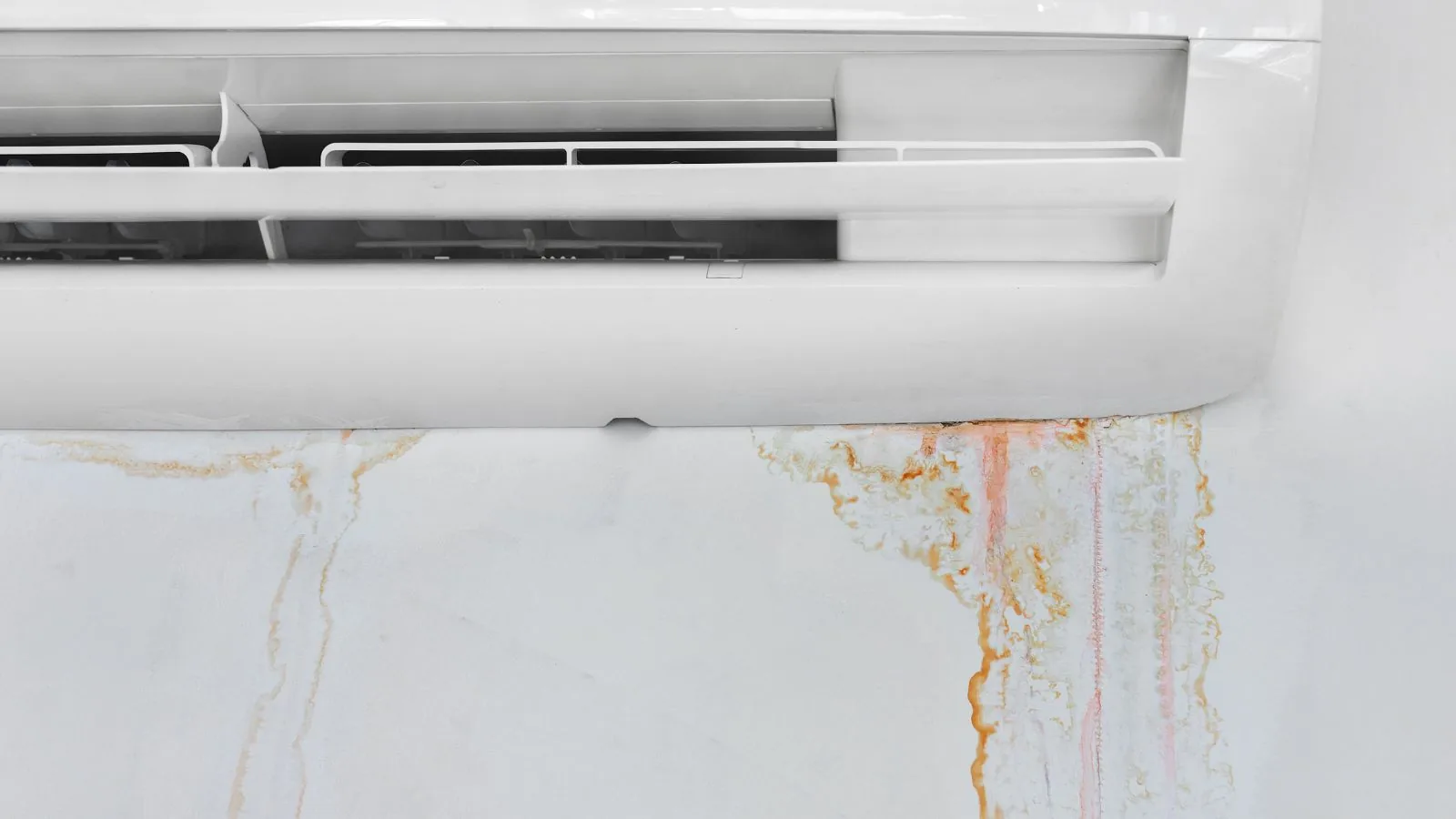
People use mold and mildew as if they were two different problems. In practice, mildew is a kind of mold, usually used for the flat growth you find on a shower wall or a window sill. Both need moisture, and both are a sign that a surface is staying damp.
This guide explains how the words are used, how to tell surface growth from deeper growth and what to do about each. Health questions about either belong with a physician.
How the words are used
Mildew usually describes a flat, powdery or downy growth on a damp surface, often white, gray or pale yellow. Mold usually describes growth that looks fuzzy, spotted or darker and that may go into the material.
The difference is a matter of degree and habit, not a clean scientific line. What you can do about it depends on the material and the area.
Professional mold work follows ANSI/IICRC S520, the published standard for mold remediation, and you can ask any company whether its crews work to it.
How to tell what you have
| Sign | Often surface growth | Often deeper growth |
|---|---|---|
| Appearance | Flat, powdery, pale | Fuzzy, spotted, dark |
| Material | Tile, glass, sealed surfaces | Drywall, wood, carpet, insulation |
| Wipes off | Yes, with detergent and water | Stains return or material is soft |
| Smell | Mild, damp | Strong, musty |
| Area | Small, near a source of moisture | Spreading or in hidden spaces |
The table is a guide only. When in doubt, treat it as the more serious case.
Cleaning surface growth
EPA guidance says that if mold covers less than about 10 square feet, you can generally handle the cleanup yourself. On hard surfaces, scrub with detergent and water and dry the area completely. EPA says routine bleach use during mold cleanup is not recommended.
Wear gloves, eye protection and a mask rated for dust, ventilate the room and bag moldy rags. Then find out why the surface stays wet.
When it is more than surface growth
- Growth on drywall, ceiling tile, insulation or carpet.
- Growth that returns after cleaning.
- Growth in a wall cavity, attic or crawl space.
- An area larger than about 10 square feet.
- Growth that followed sewage or flood water.
These cases call for removal of affected material and drying. Our mold remediation page explains the process.
Fixing the moisture
Most bathroom mildew comes from steam that has nowhere to go. A working exhaust fan, run during and after showers, helps. Window sills collect condensation in cold weather, so wipe them and check for drafts.
In basements, humidity from the ground and cool walls cause the same pattern. A dehumidifier and clear space around walls help. If water is coming in, see the basement water damage cleanup page.
Growth that keeps returning? Call dispatch.
☎ (856) 702-0892Where each tends to show up
Surface growth favors places where steam or condensation lands, like shower walls, window sills, grout lines and the underside of bathroom fan housings. Deeper growth favors places where water gets into the material, such as the bottom of a wall after a leak, the back of a cabinet under a sink or insulation in a crawl space.
Checking these places on a schedule, once a season, catches both. A flashlight and a few minutes are enough.
Cleaning safely
- Open a window or run the fan and keep the area ventilated.
- Wear gloves, eye protection and a dust mask.
- Scrub hard surfaces with detergent and water.
- Dry the area completely with towels and a fan.
- Bag and discard cleaning rags and any porous material that stays moldy.
Do not mix cleaning products. If a smell or stain returns within weeks, the moisture source is still active.
Building habits that keep surfaces dry
Run the bathroom fan during showers and for a while after. Squeegee glass and wipe wet tile. Keep furniture a few inches off exterior walls so air can move. Open blinds in the morning to let sills dry, and fix drips at faucets and under sinks quickly.
In basements, keep a dehumidifier at a steady setting and empty it or drain it to a floor drain. Keep gutters clear and downspouts pointed away from the foundation.
These steps are not glamorous, but they address the one thing both mold and mildew need, which is moisture that stays.
If a surface will not stay dry no matter what you do, ask a professional to take a reading and look for the cause.
What not to do
Do not paint over growth, do not seal it behind caulk and do not use a dry brush that throws spores into the air. Do not mix bleach with ammonia or other cleaners, and do not run a fan that blows across the growth into other rooms.
Do not ignore a patch just because it is small. Small patches show where moisture collects, and they tell you where to look for the larger problem behind them.
Chester, PA: bathrooms without exhaust fans
Older bathrooms with no exhaust fan are a common source in rowhouses and older homes. In Swarthmore and Ridley Park, a fan vented outdoors is a better fix than repeated scrubbing.
Ask your city or township building department what permits apply before adding vents or opening walls. Rules vary, so ask first.
Mold and mildew questions from Chester homeowners
Is mildew harmless?
Health questions belong with your physician. Practically, mildew is a sign of moisture and should be cleaned and dried.
Will vinegar or bleach fix it?
EPA says routine bleach use during mold cleanup is not recommended. Detergent and water and drying work on hard surfaces.
Do I need a test to know?
EPA says that if visible growth is present, sampling is unnecessary.
Why does it keep coming back?
Moisture is still present. Find the source.
Still have a question? A dispatcher can answer it by phone any hour.
☎ (856) 702-0892