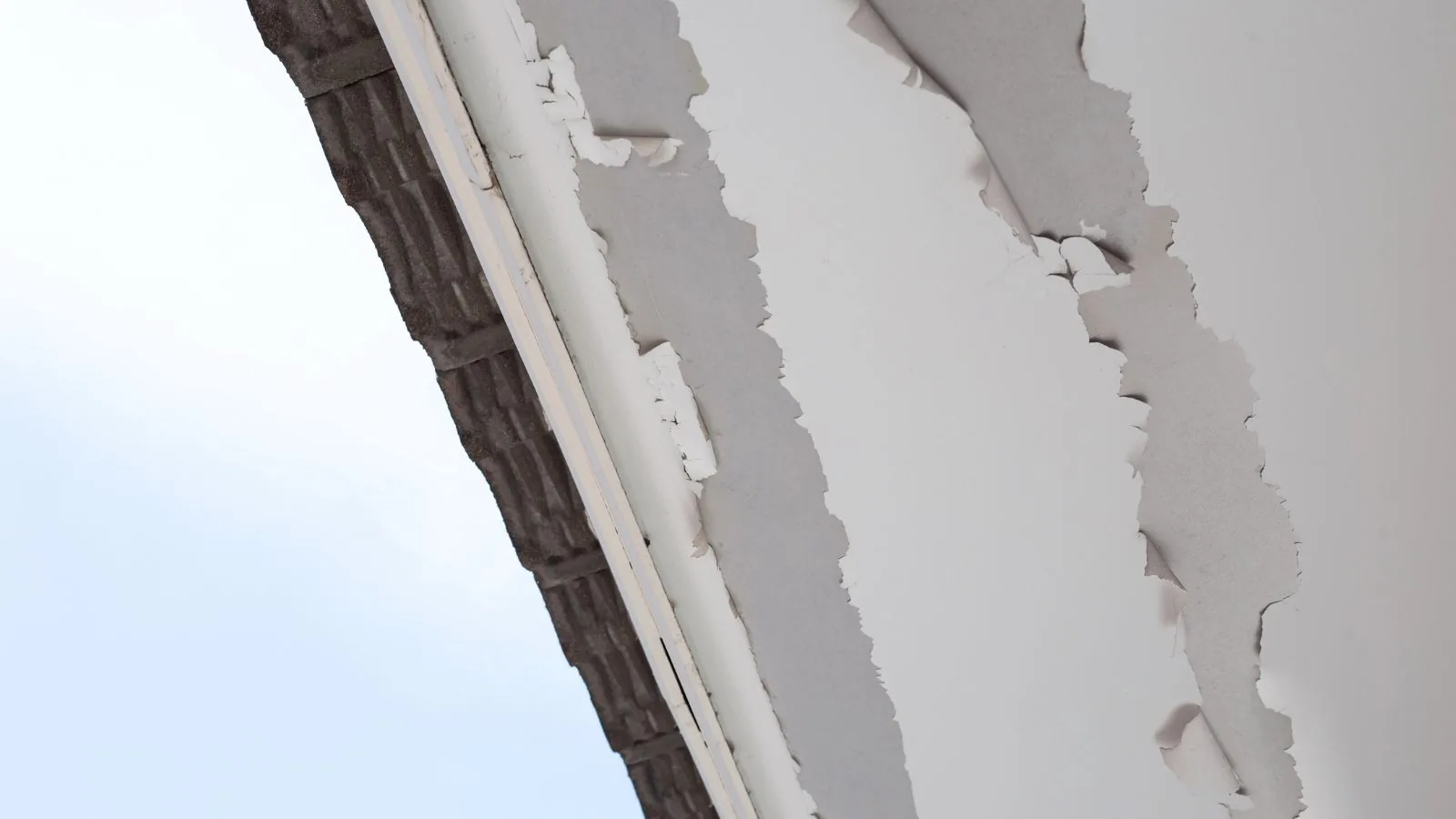
Water damage rarely announces itself with a puddle. More often it shows up as a smell, a stain or a floor that feels different underfoot. The sooner you notice, the less has to be replaced.
This guide groups the signs by where you find them, and explains what each one usually means. It ends with a few quick checks you can do without tools.
Signs on ceilings and walls
Brown or yellow rings on a ceiling mean water has passed through and dried, then come back. Bubbling or peeling paint means moisture is pushing the coating away from the surface. Soft or crumbling drywall, especially near the floor, means the gypsum has been wet for a while.
Stains that grow after rain point to the roof or a window. Stains that grow after someone showers point to a bathroom above. Stains that appear with no pattern may be plumbing inside the wall.
If you confirm damage, professional drying follows ANSI/IICRC S500, the published standard for water damage restoration.
Signs in floors
Cupped or crowned hardwood, lifting laminate seams, loose tile and soft spots in plywood all show moisture in or under the floor. Carpet that feels cool and damp when the room is warm is a sign of wet pad.
If a floor changes shape over weeks, check readings, not just appearance. Moisture can hide in the subfloor long after a surface looks dry.
Signs you smell or hear
A musty smell in a basement, closet or behind furniture usually means moisture and sometimes mold. The sound of running water when everything is off suggests a leak. A hissing or dripping sound in a wall deserves a look.
Odors are one of the earliest signs, because moisture and organic material combine before anything is visible.
Signs in your bills and fixtures
A water bill that climbs with no change in use is a clue. Low water pressure with no known cause, a toilet that runs, or a water heater that seems to run out faster than before can all be related to leaks.
The meter test is the quickest check. Turn off every fixture, then watch the leak indicator on the water meter. If it moves, water is going somewhere. The slab leak page explains what hidden leaks under floors look like.
Found signs of water damage? Call for a moisture check.
☎ (856) 702-0892Quick checks you can do today
- Look under every sink with a flashlight and dry paper towel.
- Check the washing machine hoses and the water heater base.
- Look at ceilings below bathrooms and kitchens.
- Press baseboards and the bottom of drywall gently.
- Read the water meter with everything off.
If you find damp material on a ceiling, the ceiling water damage repair page explains the next steps.
Why early detection saves materials
Drywall, insulation, carpet pad and wood all absorb water at different speeds. The first day or two decides how much can be dried in place. EPA guidance on mold says to dry water-damaged areas and items within 24 to 48 hours to prevent mold growth, which is a useful target to keep in mind when you find a leak.
A leak found early may mean a small section of drywall and a few days of drying. A leak found late may mean cutting out a wall, replacing insulation and rebuilding. The leak is the same. The time it ran is the difference.
What to do when you find a sign
- Stop the source if you can find it, and shut off the water to the fixture or the house.
- Photograph the area before touching it.
- Mark the edge of any stain with a pencil and a date, so you can see if it grows.
- Open the area to air if it is safe, and run a fan across it.
- Call for a moisture check if the material feels cool, soft or damp, or if you cannot find the source.
If the area is near electrical outlets or a panel, stay away and call a licensed electrician or the utility before doing anything else.
Seasonal patterns worth watching
Winter brings frozen and split pipes, usually in exterior walls, garages and unheated crawl spaces. Spring and summer bring storm water, window and roof leaks, and humid basements where condensation looks like a leak. Fall is a good time to check gutters, downspouts and the grading near the foundation.
A habit of looking at the same spots each season catches changes early. Photograph the ceiling under each bathroom and the basement corners once a season, and compare the pictures. A stain that is larger in the second photo is a stain that is still active.
Chester, PA: where to report an outside leak
Chester Water Authority lists a 24 hour emergency line on its website. If you suspect a leak on the street side of your meter, such as wet ground near the curb, that is the place to start.
In older houses, such as those in Wallingford and Swarthmore, a quarterly look under sinks and at ceilings below bathrooms is worth the five minutes.
Signs questions from Chester homeowners
Is a stain always water damage?
Not always. Smoke, rust and old paint can look similar. A meter reading shows whether it is wet now.
How do I tell old damage from new?
Old stains have hard edges and dry surfaces. New ones are wet or cool and spread. A meter confirms the difference.
Can I ignore a small stain?
Not safely. A small stain can mark a wet cavity. Find the source before you paint.
Who do I call about wet ground near the curb in Chester?
The water utility handles the street side of the meter. Chester Water Authority lists a 24 hour emergency line.
Still have a question? A dispatcher can answer it by phone any hour.
☎ (856) 702-0892